
| Jan 29, 2025 | Driving License and ID
Understanding Document Fraud
Buy Real And Fake Documents Online. Document fraud encompasses various illegal activities involving the creation, alteration, or misuse of documents. Here, we explore the different types of document fraud and their distinctions.
In today’s digital world, the demand for official documents—such as passports, driver’s licenses, ID cards, and birth certificates—has increased significantly. While legal documents are essential for identification and verification, the rise of counterfeit document markets has made it difficult to distinguish between real and fake documents. Many individuals seek replacement documents online due to lost IDs, travel needs, or employment verification. However, purchasing documents online comes with significant risks, including fraud, identity theft, and legal consequences.
Importance of Understanding the Difference Between Real and Fake Documents
Understanding the difference between authentic and counterfeit documents is crucial for various reasons:
- Legal Consequences: Possessing or using a fake document is illegal in most countries and can result in severe penalties, including fines, imprisonment, and criminal records.
- Security and Verification: Genuine documents have unique security features such as watermarks, holograms, barcodes, and embedded chips that prevent fraud and ensure authenticity. Fake documents often lack these security elements, making them unreliable for official use.
- Financial Risks: Many fraudulent online vendors claim to sell authentic documents but instead scam buyers by providing low-quality fakes or stealing personal information.
- Identity Protection: Providing personal details to unreliable sources can lead to identity theft, financial fraud, or misuse of your information for illegal activities.
Purpose of the Guide
This guide aims to help individuals navigate the complex world of document authentication and acquisition. It will provide insights into:
- How to verify the authenticity of a document before purchasing.
- Understanding the risks associated with fake documents.
- Legal alternatives for obtaining replacement documents through official channels.
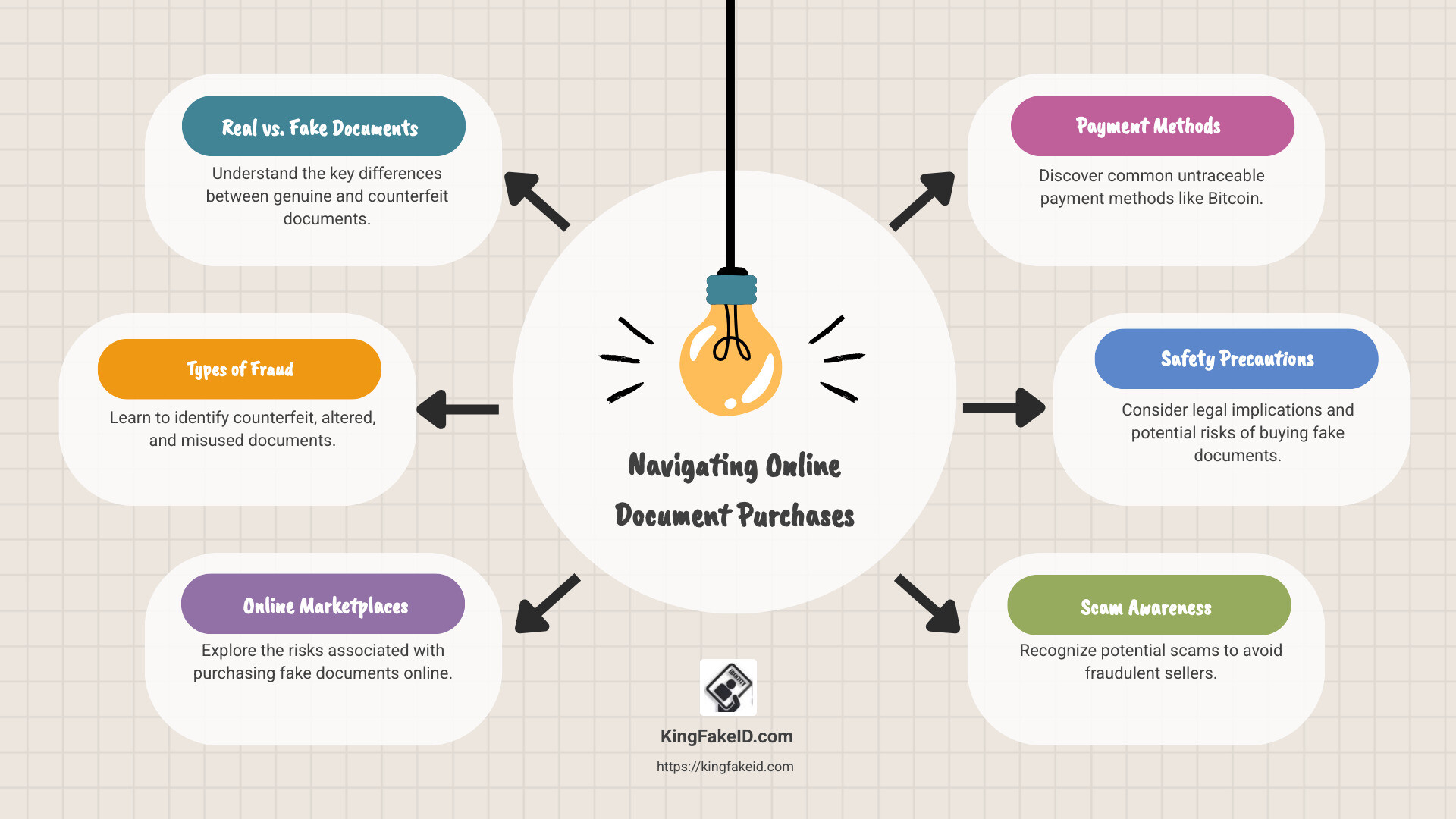
- Recognizing scams and avoiding fraudulent sellers.
Real Documents
In many cases, individuals need to replace lost, stolen, or damaged documents. Governments and authorized agencies provide real, legally recognized documents, and in some instances, these can be requested or purchased online through official channels. However, it is essential to be cautious and ensure that the documents are obtained from legitimate sources.
Types of Real Documents That Can Be Purchased Online
Certain official documents can be legally obtained online, either directly from government agencies or through authorized third-party services. These include:
- Passports – Many countries allow citizens to apply for or renew their passports online through official government portals. However, applicants must provide the necessary identification and go through verification processes.
- Birth Certificates – Birth records can be ordered online through government registries. These documents are often required for identification, citizenship applications, or legal purposes.
- Driver’s Licenses – In some states and countries, individuals can apply for a replacement or renewal of their driver’s license online. The process typically involves identity verification and payment of required fees.
- Social Security Cards – In the U.S., for example, residents can request a replacement Social Security card online through the Social Security Administration (SSA).
- Marriage and Divorce Certificates – These records can often be obtained online through official state or national vital records offices.
- Identification Cards – Some government agencies offer online applications for national or state-issued ID cards, provided that the applicant meets all legal requirements.
- Legal Name Change Documents – People who have legally changed their names can often request updated documents online from government offices.
Benefits of Buying Real Documents Online
Purchasing official documents through legitimate online channels offers several advantages:
- Convenience – Online applications allow individuals to request replacements or renewals from the comfort of their homes, avoiding long lines at government offices.
- Time Savings – The ability to apply online eliminates unnecessary trips to offices and reduces processing time. Some agencies offer expedited services for urgent requests.
- Secure Transactions – Official government websites provide secure payment options and protect applicants’ personal information, ensuring data privacy.
- Legally Recognized Documents – Documents obtained through authorized sources are legally valid and can be used for official purposes such as travel, identification, employment, and financial transactions.
- Tracking and Updates – Many government websites provide status tracking and updates, allowing applicants to monitor the progress of their applications.
Risks and Considerations When Purchasing Real Documents Online
While buying real documents online from official sources is a legitimate process, individuals should be aware of potential risks and important considerations:
- Fraudulent Websites – Many scams exist online that claim to sell official documents but instead provide fake or invalid credentials. Always verify the authenticity of the website before making any payment.
- Personal Data Security – Entering sensitive information on an unverified website can lead to identity theft. Ensure that the site is secure (HTTPS encryption) and operated by an official government agency.
- Legal Compliance – Ensure that the document being purchased is legal and complies with national and international regulations. Using an unauthorized service may result in legal consequences.
- Processing Delays – Some online applications may take longer than expected due to verification processes or government backlogs. Always check processing times before applying.
- Higher Fees for Third-Party Services – Some companies charge additional fees for processing documents on behalf of applicants. While this can be convenient, always compare costs with official government agencies to avoid overpaying.
- Limited Availability – Not all government agencies offer online services for document applications. In some cases, individuals may still be required to visit an office for identity verification or biometric data collection.
Purchasing real documents online can be safe and convenient when done through legitimate sources such as government agencies and authorized service providers. However, it is crucial to verify authenticity, protect personal information, and be cautious of scams. Always ensure that the website or organization handling the request is reputable to avoid fraud and legal issues.
Types of Fake Documents
- Counterfeits: These are unauthorized copies that replicate genuine documents. For instance, a counterfeit passport would mimic the design and security features of a legitimate one.
- Forgeries: This type involves altering an existing genuine document, such as changing the expiration date on a driver’s license.
- Pseudo Documents: These documents appear official but are not recognized by any legal authority. They often feature impressive designs but lack legal validity.
What is a Fake Document?
A fake document refers to any document that has been illegally created, altered, or forged with the intent to deceive or mislead others. These documents can mimic legitimate ones, such as passports, driver’s licenses, birth certificates, ID cards, and even academic degrees.
Fake documents are often used for fraudulent purposes, such as identity theft, illegal immigration, financial fraud, or to evade law enforcement. These documents might appear real at first glance, but closer inspection usually reveals inconsistencies or anomalies, such as incorrect formatting, suspicious serial numbers, low-quality printing, or mismatched personal information.
The internet has made it easier to obtain both real and fake documents, but purchasing or using fake documents carries serious legal and ethical risks. Many individuals may be tempted to buy fake documents for various reasons, but it is essential to understand the consequences before considering such an action.
Types of Fake Documents That Can Be Purchased Online
Fake documents come in various forms, some designed as novelties while others attempt to mimic official government-issued credentials. Below are some of the most commonly purchased fake documents:
1. Fake Diplomas and Degrees
- Counterfeit university diplomas, certificates, and transcripts are often used to gain employment or promotions.
- These fake educational documents may come from real or fabricated institutions and often include falsified grades and academic achievements.
2. Fake Identification Cards (Fake IDs)
- Many individuals, especially minors, obtain fake IDs to bypass age restrictions on alcohol, tobacco, and nightlife venues.
- Some counterfeit IDs are designed to closely resemble government-issued identification cards such as driver’s licenses.
3. Fake Passports and Travel Documents
- Fraudulent passports, visas, and travel permits are used for illegal immigration, avoiding criminal records, or traveling under a false identity.
- These fake documents may be created using forged templates or stolen genuine passport details.
4. Fake Driver’s Licenses
- Counterfeit driver’s licenses are often used by individuals who want to drive without passing official driving tests.
- These documents may also be used to avoid penalties for revoked or suspended licenses.
5. Fake Social Security Cards and Identity Documents
- Some people purchase fake Social Security cards or national ID cards to commit identity fraud or gain access to government benefits.
- These counterfeit documents are frequently linked to financial fraud and tax evasion.
6. Fake Work Permits and Immigration Papers
- Fraudulent green cards, work permits, and residence permits are sometimes used by individuals seeking employment in foreign countries without proper authorization.
- These fake immigration documents pose a serious legal risk if detected by authorities.
7. Fake Medical Records and Health Certificates
- Some people buy fake vaccination records, doctor’s notes, or medical certificates to bypass workplace health requirements or travel restrictions.
- Fake medical documents can have dangerous public health consequences.
8. Fake Bank Statements and Financial Records
- Counterfeit bank statements, credit reports, or loan application documents are used to misrepresent income, obtain loans, or commit financial fraud.
- Banks and financial institutions have sophisticated fraud detection systems, making these documents extremely risky to use.
Reasons Why People May Purchase Fake Documents Online
People buy fake documents for various reasons, but the majority of these actions involve deception and fraud. Below are some of the most common motivations:
1. Employment and Career Fraud
- Individuals without formal education may purchase fake degrees or diplomas to qualify for high-paying jobs.
- Some people use fake work permits or visas to work in foreign countries illegally.
2. Underage Access to Restricted Areas
- Many minors buy fake IDs to enter nightclubs, purchase alcohol, or bypass age restrictions on certain products.
- Fake identification is commonly used on college campuses and entertainment districts.
3. Avoiding Background Checks
- Individuals with criminal records, financial issues, or poor employment history may use fake identities to pass background checks.
- Fake documents are sometimes used to rent apartments, apply for jobs, or secure loans fraudulently.
4. Illegal Immigration and Travel Fraud
- Some individuals purchase fake passports, visas, or residence permits to gain entry into countries where they would not otherwise be admitted.
- Fraudulent immigration documents are heavily monitored by border security agencies.
5. Financial and Banking Fraud
- Counterfeit bank statements, tax documents, or pay stubs may be used to obtain loans, credit cards, or mortgage approvals.
- These fraudulent actions often lead to legal action from financial institutions.
6. Evading Legal Penalties
- Individuals with revoked or suspended driver’s licenses may obtain fake licenses to continue driving illegally.
- Criminals use fake passports and IDs to evade law enforcement or assume new identities.
7. Scamming and Cybercrime
- Online scammers frequently use fake documents to deceive victims, gain trust, or carry out fraudulent transactions.
- Fake credentials are often linked to romance scams, investment fraud, and identity theft.
8. Medical and Health Fraud
- Some people falsify medical records or vaccination certificates to avoid health screenings or workplace requirements.
- Fake medical documents may also be used to obtain prescription drugs illegally.
Dangers and Consequences of Using Fake Documents
Using fake documents is highly illegal and comes with severe consequences, including:
1. Criminal Charges and Legal Penalties
- In most countries, possession, creation, or use of counterfeit documents is a serious criminal offense.
- Penalties can include heavy fines, imprisonment, and permanent criminal records.
2. Identity Theft Risks
- Many fake document vendors are scammers who steal buyers’ personal information for identity theft or financial fraud.
- Instead of receiving a document, buyers may become victims of cybercrime.
3. Immigration Consequences
- Using fake passports, visas, or work permits can result in deportation, entry bans, or criminal prosecution.
- Fraudulent immigration attempts can permanently affect residency or citizenship applications.
4. Employment and Career Damage
- Employers often conduct background checks, and fake degrees or certificates can lead to job termination and legal action.
- Some individuals face public exposure and professional disgrace for using fraudulent qualifications.
5. Financial and Banking Fraud Consequences
- Submitting fake financial documents to banks or loan agencies can result in loan denial, blacklisting, and fraud charges.
- Banks and financial institutions actively report fraudulent activity to law enforcement agencies.
6. Inability to Use Fake Documents for Official Purposes
- Most fake documents cannot pass advanced verification systems.
- Even if they look real, modern security features like biometric scanning, holograms, and digital records expose counterfeits.
7. Risk of Being Scammed
- Many online sellers promise high-quality fake documents but fail to deliver anything, leaving buyers with no legal recourse.
- Others provide low-quality fakes that are easily detected, leading to immediate legal trouble.
8. Endangering Public Safety
- Fraudulent medical records, fake driver’s licenses, and other deceptive documents pose risks to public safety.
- Unqualified individuals using fake certifications jeopardize workplaces, hospitals, and road safety.
While the idea of purchasing fake documents may seem appealing for some individuals looking for shortcuts, the risks far outweigh any potential benefits. Legal, financial, and personal consequences can be devastating. Instead of resorting to illegal means, individuals should seek legitimate alternatives such as legal document replacement services, education, or government-assisted programs.
Genuine Documents with Fraudulent Use
Not all document fraud involves entirely fake documents; sometimes, genuine documents are used fraudulently:
- Fraudulently Obtained Genuine Documents: Here, criminals use false information to acquire real documents from an official source.
- Misuse by an Impostor: A genuine document may be used by someone other than the rightful owner, such as using another person’s ID for unauthorized access or benefits.
The Importance of Security Features
Genuine documents often incorporate security features to deter fraud, such as holograms, watermarks, and special inks. These features are crucial for verifying the authenticity of documents and are a key aspect of security protocols in document issuance.
How to Buy Real and Fake Documents Online
The process of acquiring real and fake documents online has become more accessible due to the proliferation of online marketplaces. However, it’s essential to understand the process and inherent risks.
Online Marketplaces
Online platforms that resemble e-commerce websites offer fake documents, complete with listings and reviews. These marketplaces are typically found on the dark web, requiring specific browsers and knowledge for access.
Bitcoin Transactions
Transactions on these platforms usually involve cryptocurrencies like Bitcoin, providing a degree of anonymity. It’s important to learn how to securely transfer funds and be wary of scams demanding upfront payments without protection.
Evaluating Document Quality
The quality of fake documents can vary significantly. High-quality fakes include detailed security features such as holograms and microprinting, making them appear more legitimate.
Risks Involved
Purchasing counterfeit documents is illegal and carries significant risks, including legal repercussions and potential fraud. It’s crucial to be aware of these risks and approach any transactions with caution.
Risks and Legal Implications
When buying real and fake documents online, it’s important to understand the risks and legal implications involved. This section will cover the challenges law enforcement faces, the nature of document fraud, and the security features that can help detect fakes.
Law Enforcement Challenges
Law enforcement agencies worldwide face significant problems in tackling document fraud. The anonymity provided by the internet, especially the dark web, makes it difficult to track down vendors selling counterfeit documents. According to a Michigan State University study, many transactions are conducted using Bitcoin, which is hard to trace, adding another layer of complexity for investigators.
Moreover, the sheer volume and variety of fake documents available online make it challenging for authorities to keep up. With thousands of different identity and travel documents in circulation, spotting a fake requires specialized tools and expertise.
Document Fraud
Document fraud involves the creation or alteration of documents to deceive. There are several types, including:
- Counterfeits: Unauthorized reproductions of genuine documents.
- Forgeries: Alterations of genuine documents.
- Pseudo documents: Documents not officially recognized.
These fraudulent documents are used for various illegal activities, from identity theft to illegal immigration. The SLTD database helps track lost or stolen documents, but the constant evolution of fraud tactics makes it a continuous battle for law enforcement.
Security Features
Genuine documents often include several security features to prevent fraud. These features can help identify fakes if you know what to look for:
- Holograms: 3D images that change when viewed from different angles.
- Watermarks: Designs embedded into the paper, visible when held up to the light.
- Microprinting: Tiny text that appears as a solid line to the naked eye.
Even with these features, some high-quality fake documents can mimic them. This is why visual inspection alone may not be enough. Law enforcement agencies use advanced forensic laboratories to analyze and verify documents.
Understanding these risks and legal implications is crucial before deciding to buy real and fake documents online. The next section will dig into how to identify quality in fake documents, ensuring you make informed decisions.

Identifying Quality in Fake Documents
When you’re considering buying real and fake documents online, knowing how to spot quality is essential.
Here’s what to look for:
Security Features
Security features are crucial in distinguishing genuine documents from fakes. Here are some key features to check:
- Holograms: Authentic holograms should show changing images when tilted. Fakes might have static or poorly executed holograms.
- Watermarks: Genuine watermarks appear behind images when held up to light. Counterfeits often lack this subtlety.
- Microprinting: This involves tiny text that looks like a solid line to the naked eye. High-quality fakes may attempt this but often lack precision.
Facial Validity
Facial validity refers to how genuine a document looks at first glance. While it’s not foolproof, here are some tips:
- Check the details: Look for intricate designs or insignias that are often found in genuine documents. Counterfeits may miss these details or reproduce them poorly.
- Examine the photo: Ensure the photo matches the person presenting the document. Any mismatches can be a red flag.
- Inspect the surface: Genuine documents might have raised text or images that can be felt by touch. Counterfeits often have a flat surface.
Document Quality
The overall document quality is another indicator of authenticity. Here’s what to examine:
- Paper quality: High-quality documents use specific paper designed to resist forgery. If the document feels too lightweight or flimsy, it might be fake.
- Printing quality: Look for sharp, precise prints without blurriness. Counterfeits often have pixelated or blurry text.
- Color consistency: Genuine documents maintain consistent color tones. Fakes might have mismatched or faded colors.
By focusing on these aspects, you can better assess the quality of fake documents and make more informed decisions. In the next section, we’ll address frequently asked questions about buying documents online, providing further guidance and insights.

Legal Implications of Buying and Using Real or Fake Documents
The purchase, sale, and use of both real and fake documents involve significant legal risks. Many people seeking documents online may not fully understand the laws and penalties surrounding their actions. Whether it’s a real document obtained fraudulently or a fake one created for deception, governments worldwide impose strict regulations to combat identity fraud, forgery, and document misuse.
Laws and Regulations Surrounding the Buying and Selling of Real and Fake Documents
Many countries have strict laws regarding the creation, possession, and use of identity documents. These laws apply to both real and counterfeit documents and can lead to severe legal consequences.
1. Fake Documents (Forgeries and Counterfeits)
- Forgery and Counterfeiting Laws: Producing or possessing a fake document (such as a fake ID, diploma, or passport) is considered fraud and forgery in most legal systems.
- Fraudulent Misrepresentation: Using a fake document to misrepresent one’s identity (such as for employment or financial gain) is a criminal offense.
- International Document Fraud Laws: Many countries collaborate through Interpol and border security agencies to track and prosecute document fraud.
2. Real Documents Obtained Fraudulently
Even if a document is real, it can still be illegal if it was obtained through fraudulent means:
- Identity Theft: Using stolen or falsified information to obtain a real passport, driver’s license, or Social Security number is considered identity fraud.
- Bribery and Corruption: Paying an official to issue a real document under pretenses is a serious criminal offense.
- Unauthorized Resale of Official Documents: In many countries, selling or transferring legitimate documents (such as passports or government IDs) is strictly prohibited.
3. International Legal Consequences
- The United Nations and international law enforcement agencies actively combat fake document syndicates.
- Interpol, Europol, and national security agencies track and prosecute individuals involved in document fraud across borders.
Punishments for Using Fake Documents
The penalties for using fake documents vary depending on the country and the severity of the offense. However, most legal systems impose harsh punishments to discourage fraud and identity theft.
1. Criminal Charges and Jail Time
- Many jurisdictions classify the use of fake documents as a felony offense, punishable by imprisonment.
- Prison sentences range from a few months to over 10 years, depending on the severity of the crime.
2. Heavy Fines and Financial Penalties
- Individuals caught using fake passports, IDs, or diplomas can face substantial fines (ranging from hundreds to thousands of dollars).
- Businesses or individuals involved in selling fake documents can be fined millions and have their assets seized.
3. Permanent Criminal Record
- A conviction for document fraud, forgery, or identity theft results in a permanent criminal record, affecting future employment, travel, and financial opportunities.
- Some countries impose lifetime travel bans on individuals convicted of document fraud.
4. Deportation and Immigration Consequences
- If a fake document is used for immigration purposes, the individual may face deportation and a lifetime ban from entering certain countries.
- Many nations have zero-tolerance policies for immigration fraud, leading to immediate removal and blacklisting.
5. Business and Employment Restrictions
- If a company hires an employee based on fake credentials, the business could face lawsuits and government penalties.
- Individuals caught using fake degrees or certifications may be banned from working in specific industries (e.g., medicine, law, aviation).
How to Protect Yourself Legally When Purchasing Documents Online
With the rise of online document vendors, individuals must be cautious when obtaining any document online to avoid legal troubles. Here are some ways to protect yourself legally:
1. Verify the Legitimacy of the Seller
- Check government licensing: Only purchase documents from official government agencies or authorized third-party services.
- Avoid black-market vendors: Many websites selling documents operate illegally, and transactions may lead to legal consequences or scams.
2. Avoid Fake or Altered Documents
- Do not purchase any fake documents—this is illegal in most countries.
- Be cautious with altered documents: Modifying birth certificates, passports, or driver’s licenses can still be considered fraud.
3. Follow Official Legal Channels
- If you need a replacement passport, ID, or driver’s license, apply through official government websites or embassies.
- If seeking citizenship, residency, or work permits, go through legitimate immigration processes instead of using fraudulent papers.
4. Be Aware of Scams and Identity Theft
- Many fake document websites are run by criminal organizations that will steal your money or personal information.
- Always check for verified reviews and legal compliance before providing any personal details online.
5. Consult a Legal Expert
- If you are unsure about buying a document online, seek advice from a legal professional to avoid committing fraud unintentionally.
- Immigration lawyers can guide you through legal ways to obtain travel or residency documents.
Final Thoughts: Legal Risks Are Not Worth It
Buying or using fake documents—whether it’s a forged passport, fake diploma, or counterfeit ID—can lead to serious legal consequences, criminal charges, and financial loss. Even if a document is real but obtained fraudulently, the risks remain high.
To avoid legal troubles:
✅ Only obtain documents through official legal channels
✅ Avoid fake IDs, passports, or degrees at all costs
✅ Seek legal advice if you need a document urgently
Legal Implications of Buying and Using Real or Fake Documents
The purchase, sale, and use of both real and fake documents involve significant legal risks. Many people seeking documents online may not fully understand the laws and penalties surrounding their actions. Whether it’s a real document obtained fraudulently or a fake one created for deception, governments worldwide impose strict regulations to combat identity fraud, forgery, and document misuse.
Laws and Regulations Surrounding the Buying and Selling of Real and Fake Documents
Many countries have strict laws regarding the creation, possession, and use of identity documents. These laws apply to both real and counterfeit documents and can lead to severe legal consequences.
1. Fake Documents (Forgeries and Counterfeits)
- Forgery and Counterfeiting Laws: Producing or possessing a fake document (such as a fake ID, diploma, or passport) is considered fraud and forgery in most legal systems.
- Fraudulent Misrepresentation: Using a fake document to misrepresent one’s identity (such as for employment or financial gain) is a criminal offense.
- International Document Fraud Laws: Many countries collaborate through Interpol and border security agencies to track and prosecute document fraud.
2. Real Documents Obtained Fraudulently
Even if a document is real, it can still be illegal if it was obtained through fraudulent means:
- Identity Theft: Using stolen or falsified information to obtain a real passport, driver’s license, or Social Security number is considered identity fraud.
- Bribery and Corruption: Paying an official to issue a real document under pretenses is a serious criminal offense.
- Unauthorized Resale of Official Documents: In many countries, selling or transferring legitimate documents (such as passports or government IDs) is strictly prohibited.
3. International Legal Consequences
- The United Nations and international law enforcement agencies actively combat fake document syndicates.
- Interpol, Europol, and national security agencies track and prosecute individuals involved in document fraud across borders.
Punishments for Using Fake Documents
The penalties for using fake documents vary depending on the country and the severity of the offense. However, most legal systems impose harsh punishments to discourage fraud and identity theft.
1. Criminal Charges and Jail Time
- Many jurisdictions classify the use of fake documents as a felony offense, punishable by imprisonment.
- Prison sentences range from a few months to over 10 years, depending on the severity of the crime.
2. Heavy Fines and Financial Penalties
- Individuals caught using fake passports, IDs, or diplomas can face substantial fines (ranging from hundreds to thousands of dollars).
- Businesses or individuals involved in selling fake documents can be fined millions and have their assets seized.
3. Permanent Criminal Record
- A conviction for document fraud, forgery, or identity theft results in a permanent criminal record, affecting future employment, travel, and financial opportunities.
- Some countries impose lifetime travel bans on individuals convicted of document fraud.
4. Deportation and Immigration Consequences
- If a fake document is used for immigration purposes, the individual may face deportation and a lifetime ban from entering certain countries.
- Many nations have zero-tolerance policies for immigration fraud, leading to immediate removal and blacklisting.
5. Business and Employment Restrictions
- If a company hires an employee based on fake credentials, the business could face lawsuits and government penalties.
- Individuals caught using fake degrees or certifications may be banned from working in specific industries (e.g., medicine, law, aviation).
How to Protect Yourself Legally When Purchasing Documents Online
With the rise of online document vendors, individuals must be cautious when obtaining any document online to avoid legal troubles. Here are some ways to protect yourself legally:
1. Verify the Legitimacy of the Seller
- Check government licensing: Only purchase documents from official government agencies or authorized third-party services.
- Avoid black-market vendors: Many websites selling documents operate illegally, and transactions may lead to legal consequences or scams.
2. Avoid Fake or Altered Documents
- Do not purchase any fake documents—this is illegal in most countries.
- Be cautious with altered documents: Modifying birth certificates, passports, or driver’s licenses can still be considered fraud.
3. Follow Official Legal Channels
- If you need a replacement passport, ID, or driver’s license, apply through official government websites or embassies.
- If seeking citizenship, residency, or work permits, go through legitimate immigration processes instead of using fraudulent papers.
4. Be Aware of Scams and Identity Theft
- Many fake document websites are run by criminal organizations that will steal your money or personal information.
- Always check for verified reviews and legal compliance before providing any personal details online.
5. Consult a Legal Expert
- If you are unsure about buying a document online, seek advice from a legal professional to avoid committing fraud unintentionally.
- Immigration lawyers can guide you through legal ways to obtain travel or residency documents.
Final Thoughts: Legal Risks Are Not Worth It
Buying or using fake documents—whether it’s a forged passport, fake diploma, or counterfeit ID—can lead to serious legal consequences, criminal charges, and financial loss. Even if a document is real but obtained fraudulently, the risks remain high.
To avoid legal troubles:
✅ Only obtain documents through official legal channels
✅ Avoid fake IDs, passports, or degrees at all costs
✅ Seek legal advice if you need a document urgently
Remember: The short-term benefits of using a fake document are never worth the long-term consequences.
These checks can help you determine if a document is a high-quality fake or a poor imitation.

Conclusion
In counterfeit identification, KingFakeID.com stands out with its commitment to providing high-quality fake documents that closely mimic genuine ones. Our meticulous attention to detail and integration of advanced security features make our products some of the most realistic available in the market.
The counterfeit identification industry is vast and complex. It involves a range of products, from fake IDs to passports, all crafted to meet the needs of individuals seeking novelty or replacement documents. At KingFakeID.com, we understand the importance of authenticity and strive to replicate the intricate security elements found in real documents. These features include holograms, UV printing, and microtext, which are crucial for ensuring that our products are nearly indistinguishable from their legitimate counterparts.
However, remember the risks and legal implications associated with using fake documents. While our products are designed for novelty and verification purposes, using them for illegal activities can lead to serious legal consequences. We urge our customers to use our services responsibly and to be aware of the potential repercussions of document fraud.
For those interested in exploring our offerings, visit our KingFakeID.com service page to learn more about our products and services. We prioritize customer privacy and satisfaction, ensuring a seamless and discreet purchasing experience.
In summary, whether you’re looking to buy real and fake documents online for novelty purposes or as replacements, KingFakeID.com provides expertly crafted solutions with advanced security features. Always be informed and cautious in your dealings, and ensure that your actions align with legal and ethical standards.
As we have explored, the use of real and fake documents comes with significant legal, financial, and ethical risks. Whether purchasing a passport, driver’s license, diploma, or any other document online, individuals must be fully aware of the laws and consequences surrounding their actions.
A. Recap of Key Points
- Real Documents: While it is possible to legally purchase real documents such as passports, birth certificates, and driver’s licenses online, these must come from official government agencies or authorized third-party providers.
- Fake Documents: Many people purchase fake IDs, diplomas, and other fraudulent documents for convenience, but using them for any official purpose is illegal and punishable by law.
- Legal Implications:
- Forgery and fraud laws apply globally, and penalties range from fines to lengthy prison sentences.
- Using fraudulent documents for employment, travel, or financial gain can lead to criminal records, deportation, or permanent travel bans.
- Employers and businesses that accept fake credentials may also face lawsuits and legal consequences.
- Protecting Yourself Legally: The safest way to obtain documents is through official government channels. Avoid websites offering counterfeit papers, and consult legal professionals if you are unsure about a document’s legitimacy.
B. Final Thoughts on the Topic
In a world where fraudulent documents are easily accessible online, the temptation to take shortcuts may seem appealing. However, the consequences far outweigh any perceived benefits. Whether for immigration, employment, or identification purposes, using real, legally obtained documents is the only way to ensure safety and avoid legal trouble.
If you are considering purchasing a document online, ask yourself:
🔹 Is this document legally obtained?
🔹 Could using this document put my future at risk?
🔹 Am I willing to face criminal charges if caught?
Honest, legal alternatives always exist. Taking the right path may take longer, but it ensures peace of mind and a secure future.
C. Resources for Further Reading
For those looking for legitimate ways to obtain official documents, the following resources may be helpful:
✅ Government websites: Check your country’s official government portal for ID, passport, and licensing services.
✅ Legal assistance: If you need help with immigration or document verification, consult certified immigration lawyers.
✅ Online fraud awareness: Educate yourself about online scams, identity theft, and document fraud through cybersecurity organizations and law enforcement agencies.
What are the common types of fake documents?

When you’re looking to buy real and fake documents online, it’s important to know the types of fake documents that exist:
Counterfeits: These are unauthorized reproductions of genuine documents. They aim to look exactly like the real thing but are entirely fake.
Forgeries: These involve altering a genuine document. For example, changing the date of birth on an ID to make someone appear older.
Pseudo Documents: These are documents that look official but are not recognized by any legitimate authority.
Understanding these types can help you recognize what you might encounter online.
How can I ensure the quality of a fake document?
Ensuring the quality of a fake document involves checking for security features and overall document quality:
Security features: Look for holograms, watermarks, and microprinting. High-quality fakes might replicate these but often without the precision of genuine documents.
Document quality: Examine the paper and printing quality. Genuine documents use specific materials that can be hard to replicate. A fake might feel flimsy or have blurry text.
Facial validity: Check if the document looks genuine at first glance. Pay attention to details like insignias and the photo matching the person.
These checks can help you determine if a document is a high-quality fake or a poor imitation.
What are the legal risks of buying fake documents?
Buying fake documents comes with significant legal implications:
Document fraud: Possessing or using fake documents can lead to criminal charges. It’s illegal in many jurisdictions and can result in fines or imprisonment.
Identity theft risks: Providing personal information to buy fake documents can expose you to identity theft, leading to further legal and financial troubles.
Law enforcement challenges: Using fake documents to deceive authorities can have severe consequences, including arrest and prosecution.
Understanding these risks is crucial before deciding to purchase fake documents. Always weigh the potential consequences against the perceived benefits.
What is the difference between real and fake documents?
Real documents are legally issued by authorized government agencies and are verifiable in official databases. Fake documents are counterfeit versions that mimic real ones but have no legal validity.
Is it illegal to buy fake documents online?
Yes, purchasing and using fake documents is illegal in most countries. It can lead to severe penalties, including fines and imprisonment.
What are the risks of using fake documents?
Using fake documents can result in criminal charges, identity theft, fraud allegations, and denial of services from government and private institutions.
Can I verify whether a document is real or fake?
Yes, you can verify real documents through official government databases, barcode or hologram checks, and contacting the issuing authority.
Why do people buy fake documents?
Some people purchase fake documents to bypass age restrictions, gain employment, or for travel purposes. However, this is illegal and comes with serious consequences.
What are the legal penalties for using fake documents?
Penalties vary by country but may include heavy fines, imprisonment, deportation (for non-citizens), and a permanent criminal record.
Are there any safe ways to obtain real documents online?
Real documents should only be obtained from authorized government websites or official service providers. Avoid third-party sellers who promise “real” documents outside legal channels.
How can I protect myself from document fraud?
To avoid scams, always verify the authenticity of documents before use, purchase only from official sources, and report any suspicious activities to authorities.
Can fake documents be detected by authorities?
Yes, authorities have advanced verification methods, such as biometric scanning, UV light detection, and database cross-checks, to identify fake documents.
What should I do if I receive a fake document unknowingly?
If you receive a fake document by mistake, report it to the relevant authorities immediately to avoid legal consequences. Do not attempt to use it.
Are there legal alternatives to obtaining necessary documents?
Yes, if you need an official document, you should apply through the proper government channels. Many agencies offer expedited services if you require urgent processing.
What are some common scams related to document sales online?
Scammers often promise “real” passports, IDs, or diplomas but deliver low-quality fakes. They may also steal your personal information for identity fraud. Always verify sellers before making any transactions.
How do black market document sellers operate?
They usually operate through encrypted websites, social media, or underground forums, offering counterfeit documents for high prices while evading law enforcement.
What countries have the strictest penalties for fake document use?
Countries like the United States, the United Kingdom, Canada, Germany, and Australia impose severe penalties for the possession or use of fake documents, including long-term imprisonment.
Can fake diplomas be used for employment?
While some employers may not verify diplomas thoroughly, most reputable organizations conduct background checks, and using a fake diploma can lead to job loss or even legal action.
What happens if I get caught with a fake ID?
Consequences can range from fines and confiscation of the ID to criminal charges and even jail time, depending on the jurisdiction.
Are all online document providers fraudulent?
While some services offer legitimate document assistance (like passport renewals through authorized agencies), any provider selling fake documents is operating illegally.
How can I report document fraud?
You can report fraudulent document sales to law enforcement agencies, cybersecurity authorities, or consumer protection organizations in your country.
What are some warning signs of fake document websites?
Common red flags include:
No official verification process
No customer reviews or fake testimonials
Requests for payment via untraceable methods (cryptocurrency, gift cards)
Unrealistic promises, such as legal passports in 24 hours
Is there a way to check if my identity has been used fraudulently?
Yes, you can monitor your credit report, check official databases, and stay alert for any unauthorized transactions or suspicious activities under your name.


0 Comments